 Italiano
 Inglese
Welcome to Our Blog - High-Performance Braiding for Marine Applications
High-Performance Braiding for Marine Applications
- Industria tessile
- Mar 23, 2026
High-Performance Braiding for Marine Applications
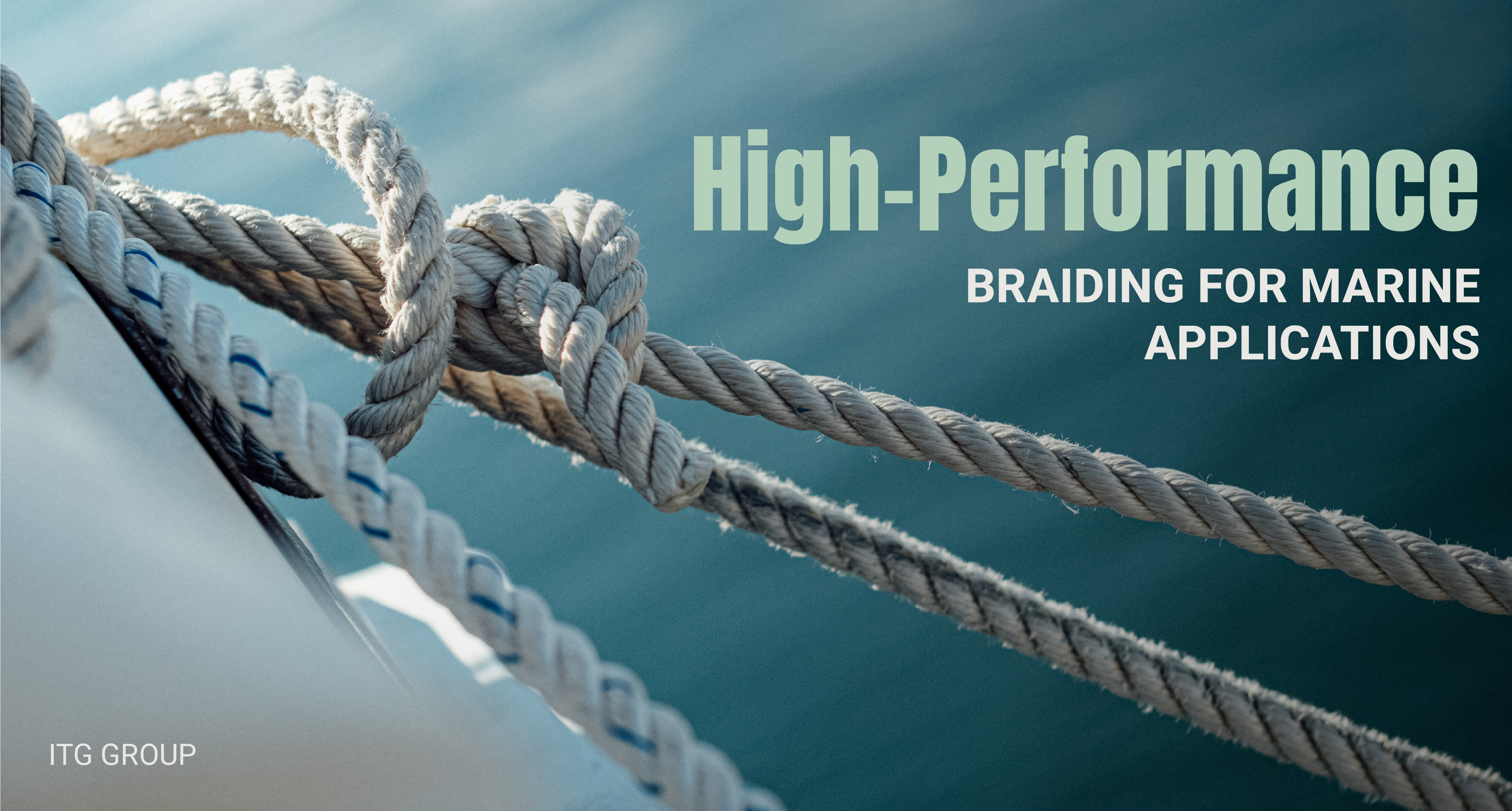
The maritime and fishing sector is not a seasonal niche or a passing trend; it is a structural industry built on critical operational infrastructure. Mooring ropes, large-diameter hawsers, and industrial fishing nets sustain vessels, port operations, and aquaculture systems worldwide. This permanent dependency makes the segment a technical and commercial opportunity that goes far beyond traditional textile markets.
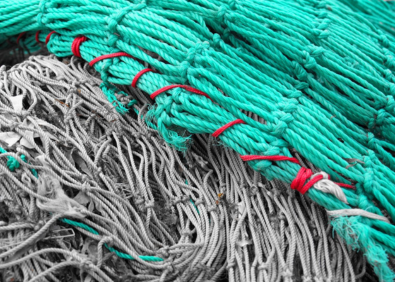
From a market perspective, the data confirms its relevance. The global fishing nets market was valued at approximately US $1.67 billion in 2024 and is projected to grow at a compound annual growth rate (CAGR) of around 4.6% through 2034, driven by the expansion of commercial aquaculture and the increasing adoption of high-performance synthetic nets. This figure reflects only the fishing net segment and does not include mooring ropes, industrial hawsers, and other maritime applications, indicating that the total market linked to marine braided products is significantly larger.
Beyond its size, the attractiveness of this industry lies in its structural demand. Nets degrade due to constant abrasion and prolonged exposure to saline environments. Mooring ropes lose strength over time because of mechanical fatigue. Vessels require continuous maintenance. This dynamic creates consistent replacement cycles and lower volatility compared to textile markets driven by discretionary consumption.
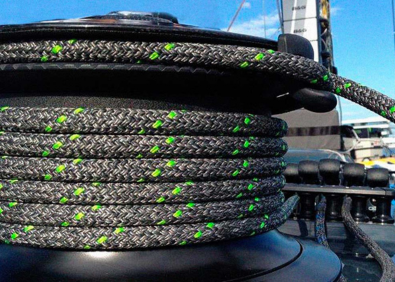
The economic opportunity is directly connected to technical capability. Not all braiding machines are designed to manufacture competitive maritime products. Producing hawsers and large-diameter ropes requires reinforced frames, stable transmission systems, and sufficient motor power to maintain uniform tension in structures that can exceed 80 mm in diameter. In addition, the number of spindles directly affects braid density, improving load distribution and abrasion resistance—critical factors when products must withstand high dynamic loads.
The sector has also evolved toward high-performance synthetic fibers such as high-tenacity polyester, industrial nylon, technical polypropylene, and ultra-high-modulus fibers. These materials are progressively replacing metallic solutions in certain applications due to their lower weight and superior corrosion resistance. However, they require precise tension control and mechanical stability during the braiding process to preserve their structural properties.
In this market, purchasing decisions are based on performance, durability, and operational safety. This reduces price-only competition and enables stronger margins compared to conventional textile applications. The combination of application value, technical entry barriers, and structural demand creates favorable conditions for solid returns when supported by the appropriate production capabilities.
Braiding machines designed specifically for rope, hawser, and industrial maritime applications make it possible to participate competitively in this segment. In this context, the specialized solutions available within the ITG Group portfolio respond directly to the technical demands of the maritime and fishing industry, integrating large-diameter capacity, high spindle density, and operational stability for high-performance applications.