
 Italiano
 Inglese
Welcome to Our Blog - ITG Group
Blog
- Industria tessile
- Jan 22, 2025
Crafting the Perfect Fit: The Role of Customization in the Textile Industry
Customization has become a vital element in the textile industry, allowing manufacturers to meet diverse client needs and stand out in a competitive market. The ability to adapt products to specific requirements—whether through design, functionality, or material composition—has reshaped the industry, enabling brands to deliver unique, high-quality solutions tailored to their customers.
Modern consumers value individuality, which drives the demand for customized products. In fashion, for example, brands can no longer rely solely on generic designs to satisfy their audiences. Instead, they use customized textiles with unique prints, colors, and finishes to deliver garments that align with current trends or specific customer preferences. This approach not only enhances customer satisfaction but also builds stronger brand loyalty.
Beyond fashion, industries like interior design and technical textiles also benefit from customization. Architects and interior designers rely on tailor-made fabrics for upholstery and curtains that meet their exact aesthetic and functional needs. Similarly, technical textiles, used in industries such as automotive, healthcare, and sports, often require specific properties like flame resistance, durability, or moisture-wicking capabilities that can only be achieved through customized production.
Advancements in technology have made textile customization more accessible and efficient. Digital printing, for instance, has revolutionized the way manufacturers produce patterns and designs, offering high precision, faster turnaround times, and the ability to create intricate details. Similarly, techniques like dye sublimation and laser cutting allow for greater flexibility in creating unique textures, colors, and finishes.
Customization is also evident in material selection. Manufacturers work with clients to choose fibers and fabrics that meet specific performance criteria, such as eco-friendliness, softness, or enhanced durability. With the rise of sustainability, many clients are opting for organic or recycled materials to align with their values, further emphasizing the importance of customization in meeting market trends.
In addition to enhancing product appeal, customization also improves the efficiency of production. Many textile manufacturers now use advanced software and machinery to cater to unique requests while maintaining scalability. For example, CAD (computer-aided design) programs allow clients to visualize custom patterns before production, reducing errors and ensuring that final products meet expectations.
This streamlining is essential for industries like retail, where brands need to release new collections quickly and adapt to changing consumer trends. Customization allows manufacturers to deliver tailored solutions without sacrificing speed or quality, making it a critical tool for staying competitive.
In a crowded marketplace, customization is one of the most effective ways for brands to differentiate themselves. Unique, tailored products help companies stand out, whether they’re creating limited-edition fashion pieces or specialized fabrics for niche markets. This differentiation not only attracts attention but also justifies premium pricing, as consumers are often willing to pay more for personalized, high-quality goods.
For businesses, offering customized textiles also strengthens client relationships. Collaborating with customers to develop fabrics tailored to their exact needs builds trust and loyalty, fostering long-term partnerships.
At ITG Group, we understand the critical role customization plays in today’s textile industry. That’s why we work closely with our suppliers to provide solutions that allow our customers to meet evolving market demands. Whether it’s connecting customers with high-quality suppliers or offering expert guidance to align with market trends., ITG Group is dedicated to supporting its customers’ success. We’re your commercial ally in the textile industry, committed to delivering solutions that drive growth and innovation.
- Industria tessile
- Jan 22, 2025
The Athleisure Revolution: Redefining Fashion and Its Impact on the Textile Industry
Athleisure, the fusion of athletic wear and casual fashion, has evolved into one of the most significant trends in modern apparel. What began as a functional trend for athletes and gym-goers has rapidly transitioned into a mainstream style embraced by a diverse range of consumers. The popularity of athleisure is rooted in its versatility, comfort, and the growing focus on health and fitness in today’s culture. This shift is not only transforming wardrobes but also influencing the textile industry, where new innovations in fabric technology are enabling performance wear to seamlessly blend with everyday fashion.
The growth of athleisure can be attributed to several key factors. First, the changing nature of work and lifestyle has increased demand for clothing that balances comfort with style. As more people work from home or participate in more relaxed social environments, athleisure provides a perfect solution. It allows individuals to look put-together while still feeling comfortable enough to work out, run errands, or relax at home. This shift in lifestyle demands apparel that’s not just stylish but functional, and athleisure fits that need perfectly.
Moreover, as wellness trends continue to gain traction, athleisure offers a visible symbol of a health-conscious lifestyle. The trend represents more than just fashion; it’s an embodiment of personal well-being, making it attractive to a broad demographic of consumers looking to reflect their active, health-focused lifestyles in their clothing choices.
The technology behind athleisure fabrics has been integral to the category’s success. Brands are continuously innovating to improve fabric performance in areas such as moisture-wicking, breathability, durability, and flexibility. Cutting-edge textiles, like spandex blends and moisture-absorbing materials, ensure that athleisure wear performs as well as it looks. The fusion of synthetic and natural fibers creates garments that are not only comfortable but also adaptable to various environments, making them ideal for both intense workouts and day-to-day wear.
One of the most significant advancements in athleisure fabric technology is the development of fabrics that offer superior breathability and moisture control. These materials are designed to regulate body temperature, wick away sweat, and provide the kind of flexibility needed for physical activity. In addition to performance, these fabrics are often engineered to be lightweight and stretchable, ensuring comfort without sacrificing style.
Smart textiles, which incorporate embedded sensors or other technology, are another growing area within athleisure. These fabrics can track things like heart rate, body temperature, or even movement, offering consumers more than just clothing but a wearable experience. This trend aligns perfectly with the increased focus on fitness and self-tracking technologies in the modern consumer’s lifestyle.
As athleisure continues to evolve, its future looks promising. Innovations in sustainable materials are making it possible for athleisure brands to embrace eco-friendly practices while still offering high-performance fabrics. Many consumers are now demanding apparel that not only fits their active lifestyle but also aligns with their values, particularly when it comes to sustainability. Brands that can deliver both performance and sustainability will likely capture a larger share of the market in the coming years.
Furthermore, the lines between athleisure and other fashion segments continue to blur. What began as workout gear has become a staple in casual and even professional wear, with major fashion houses incorporating athleisure-inspired elements into their collections. The trend is also adapting to new contexts, such as hybrid work environments and outdoor activities, where functionality and fashion are equally prioritized.
At ITG Group, we provide a wide range of looms, including knitting looms, which are ideal for producing fabrics for athletic wear and activewear. These looms, combined with our offering of cylinders, enable our customers to diversify their production lines without the need for significant investment. This flexibility allows businesses to adapt to the growing demand for athleisure products and expand their product offerings, making it easier to stay competitive in the ever-evolving textile market.
Let us provide you with the tools you need to stay ahead in the textile industry. Reach out now to explore the possibilities!
- Industria tessile
- Dec 12, 2024
Data, digitalization and technology: A possible solution for Latin America to fight against Chinese fast fashion
The textile industry in Latin America faces a complex challenge in the global context, competing with the growing production of fast fashion from China and the United States Also, as consumer preferences shift towards more sustainable and ethical fashion choices, Latin American textile companies are presented with both a challenge and an opportunity. The rapid rise of fast fashion has pressured local manufacturers to innovate or risk obsolescence. However, many companies in the sector are demonstrating that the key to remaining competitive and sustainable lies in the adoption of new technologies and the digitalization of production processes.
One of the main challenges for fast fashion is supply chain efficiency. In advanced international markets, around 70% of textile companies have already integrated technology into their processes, while in Latin America, the percentage is considerably lower. This is where platforms like Maqui, a Colombian-Mexican startup, are making a difference. Maqui provides fashion brands with tools to track their production, optimize inventory management and reduce waste. This allows textile companies in the region to become more efficient and globally competitive, while adopting more sustainable practices.
The use of data and digitalization are key to this transformation. Data analytics enables companies to identify bottlenecks in the supply chain, predict market demands, and adjust production to reduce costs and waste. Moreover, the integration of technology through platforms like Maqui not only enhances operational efficiency but also fosters greater transparency within the supply chain. By utilizing real-time data tracking and analytics, brands can monitor every stage of production, from raw material sourcing to final delivery. This transparency enables companies to identify inefficiencies and make informed decisions that align with sustainable practices.
This approach not only improves processes, but also responds to the growing demand for high-quality, ethical products. According to recent data, Mexico exported $8 billion worth of garments to the United States in 2020, indicating that consumers increasingly value quality and sustainability in their purchases. The industry must build strategies that empower consumers to make ethical choices by providing insight into the origins and environmental impact of the products they purchase.
To fully harness the potential of digitalization, training and capacity building for the workforce in Latin America are crucial. Many textile workers may lack the technical skills required to engage with new technologies effectively. Investing in educational programs and workshops as well as looking for digital platforms that are available to them can close this gap, ensuring that employees are equipped to leverage digital tools. By fostering a skilled workforce, companies can maximize the benefits of technology while promoting job satisfaction and loyalty.
Maqui, for example, has found an innovative solution by using WhatsApp to digitalize the supply chain in factories that have low levels of technology adoption. By leveraging a widely used platform, everyone involved in production, from seamstresses to quality control agents, can report on their daily activities, providing granular data and improving traceability and, at the same time, feel the importance of their involvement within the transformation process of the industry they work in.
In short, the Latin American textile industry has the opportunity to transform its operations towards a more efficient and responsible model. Platforms like Maqui, along with ITG Groups commitment to innovation, enable the regions brands to not only compete in a global marketplace, but to do so in a sustainable manner. The integration of advanced technologies and data analytics are essential to drive this transition to a more connected and circular future. Digitalization and sustainability are not just a passing trend, but the path to a stronger, more ethical and efficient textile industry.
How prepared are you and your team to introduce these improvements in your processes and enable endless possibilities to your business?
- Industria tessile
- Dec 12, 2024
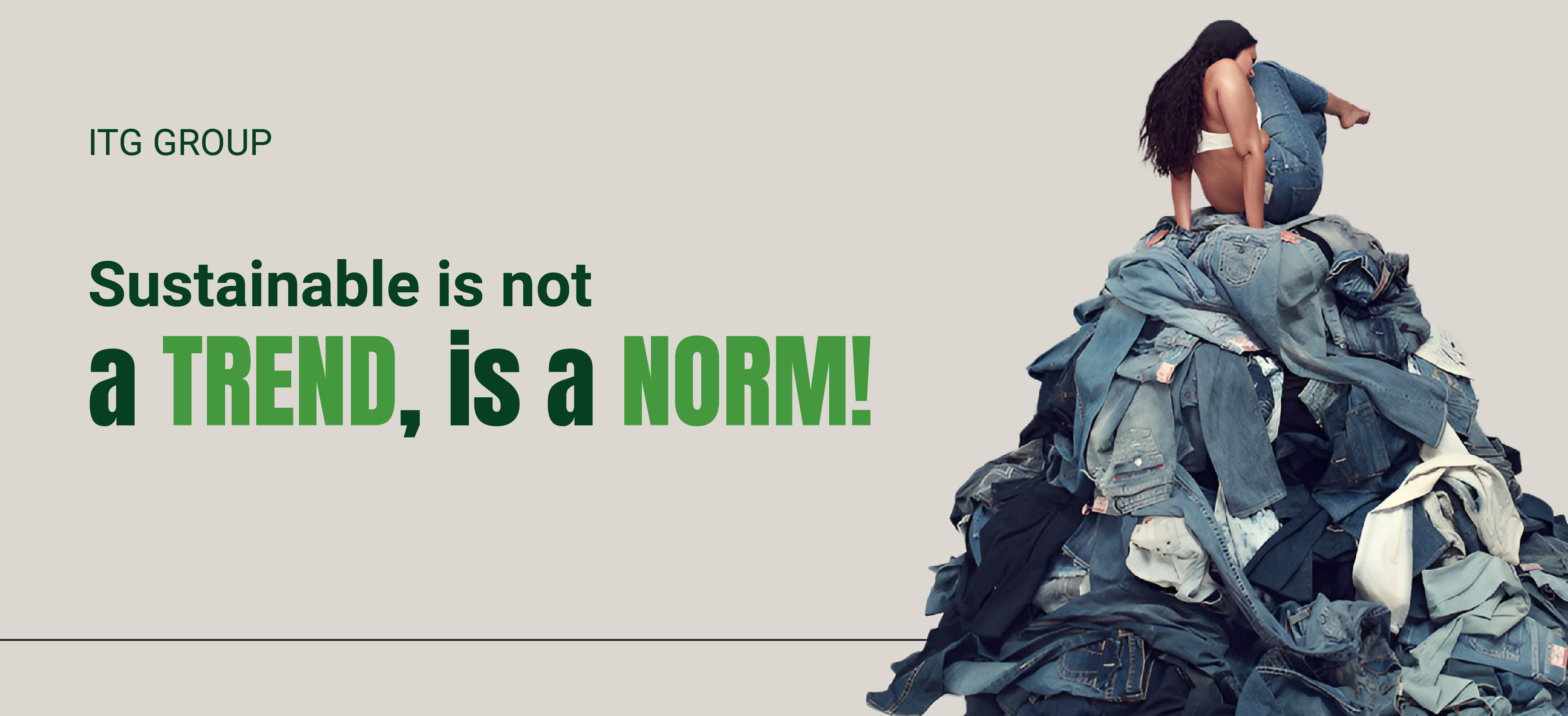
Sustainable is not a TREND, is a NORM!
In recent years, the textile sector has been at the center of a crucial transformation. What was once seen as an emerging trend has now established itself as an urgent necessity: sustainable fashion. Sustainability is no longer an option or an aspirational concept, but a standard that redefines production processes and the life cycle of garments.
The key to this change lies in upcycling, a technique that promotes the reuse of existing garments and textile waste to give them a second life, thus avoiding the unnecessary use of new resources and the generation of waste. This approach, rather than being a simple creative process, is aimed at mitigating the major environmental impacts that the textile industry generates globally.
An example of this, is the work of designer Erica Vega, who has focused on giving garments a second life. “We recycle discarded jeans, rescuing their value and avoiding their final destination in landfills”, explains Vega. To fully grasp the urgent need for projects like the one Erica works on with her foundation Futuro Verde, a project that is committed to upcycling, obtaining raw material from fairs, donations or directly from brands that collaborate with them, it’s essential to recognize the scale of the environmental impact associated with traditional textile production.
The industry is one of the largest polluters globally, responsible for significant water consumption, chemical runoff, and waste generation. For instance, the United Nations estimates that the fashion industry accounts for approximately 10% of global carbon emissions, surpassing even the aviation sector. Understanding these figures underscores the pressing need for a paradigm shift; sustainability is not merely a trend but an essential response to a systemic crisis that affects our planet.
Denim, for example, is one of the pieces that has the greatest water impact in its production. From the cotton seed to the pair of jeans that reaches our hands, it is estimated that up to 10,000 liters of water can be consumed per garment. In response to this challenge, denim recycling has emerged as an efficient solution to reduce the demand for new materials and reduce fashions environmental footprint.
The reuse process not only involves a change in the way we produce, but also in the mindset of the consumer. The industry is beginning to close the textile cycle by promoting a culture that values durability and recycling, rather than quick, disposable consumption. This is reflected in initiatives that collect post-consumer jeans, transform them into new garments, and advocate conscious and ethical consumption.
In Latin America, textile waste and overconsumption continue to be major challenges, but the growing adoption of circular fashion and recycling is paving the way for a more sustainable future. This movement not only responds to a social demand, but also seeks to encourage greater transparency and accountability in all phases of a garments life cycle.
In addition to environmental concerns, the social implications of sustainable fashion cannot be overlooked. The fast fashion model often relies on exploitative labor practices, with workers in developing countries facing poor working conditions and inadequate wages. By adopting sustainable practices, companies can not only reduce their environmental footprint but also foster ethical labor standards. Emphasizing fair trade and transparency in the supply chain creates a more equitable fashion ecosystem, where consumers can feel confident that their purchases support humane working conditions and empower local communities.
Education plays a pivotal role in this transition. Consumers must be equipped with the knowledge to make informed decisions about their clothing purchases. This includes understanding the materials used, the production processes, and the true cost of cheap, fast fashion. Brands can contribute to this education by sharing stories about their supply chains and the environmental impact of their products. Initiatives such as workshops, online campaigns, and partnerships with educational institutions can raise awareness and inspire a shift in consumer behavior towards more sustainable choices.
We are at a turning point. Responsible fashion has gone from being an option to becoming a norm within the textile industry, driving a structural change that seeks to positively impact both the environment and the communities that depend on this industry.
ITG Group joins this vision, committing to support innovative solutions that contribute to sustainability in the textile sector. From the implementation of cleaner technologies to the promotion of responsible production practices, we continue to weave a future where fashion and respect for the environment can coexist harmoniously.