
 Italiano
 Inglese
Welcome to Our Blog - ITG Group
Blog
- Technical
- Sep 08, 2026
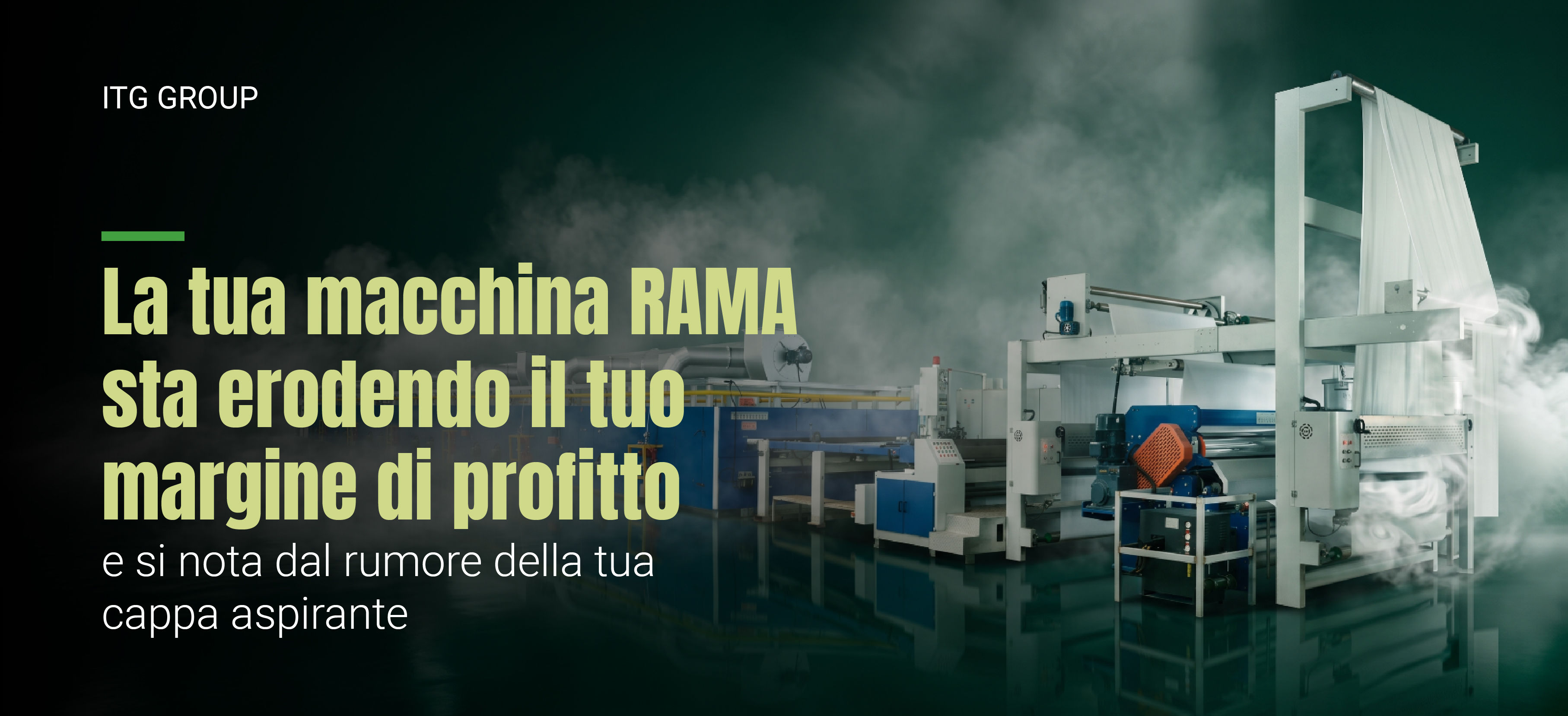
La tua macchina RAMA sta erodendo il tuo margine di profitto, e si nota dal rumore della tua cappa aspirante
Se gestisci una linea di finissaggio, sai già qual è la prima macchina che controlleresti se la bolletta energetica salisse: la RAMA.
Di solito è il maggiore consumatore singolo di energia termica dello stabilimento, e la ragione è pura fisica — stai facendo passare tessuto umido attraverso camere di aria calda in circolazione, e generare quel calore, camera dopo camera, turno dopo turno, è costoso. La letteratura è netta al riguardo: la RAMA è descritta come una delle macchine che consumano più energia termica in tutto il processo tessile, e il finissaggio, insieme alla preparazione dei processi a umido, rappresenta circa il 35% dell'energia termica di uno stabilimento integrato.
Ecco la parte che non compare su nessun indicatore: gran parte di quell'energia non tocca mai il tuo tessuto. Se ne va dalla cappa di scarico come aria calda, si irradia nello stabilimento, o viene sprecata mantenendo una temperatura di cui il processo non aveva bisogno. Non è un guasto drammatico. È una perdita silenziosa e continua — e si paga in ogni metro di tessuto che produci.
Questo articolo analizza dove una RAMA convenzionale perde energia, e come il design della nostra macchina RAMA XY-D-2600 attacca ogni perdita all'origine.
Dove una RAMA convenzionale perde energia
Tre perdite concentrano la maggior parte dello spreco, e si sommano.
Aria di scarico calda, buttata via. Una RAMA espelle continuamente aria umida e calda per mantenere l'atmosfera della camera adatta all'asciugatura. In una configurazione convenzionale, quello scarico —che trasporta energia termica reale che hai già pagato per generare— sale dritto dalla cappa. La ricerca sui flussi di energia nelle RAMA identifica il gas di scarico come uno dei maggiori colli di bottiglia per l'efficienza, e gli studi sul recupero del calore residuo dalle RAMA hanno dimostrato riduzioni del consumo di combustibile superiori al 60% quando quel calore di scarico viene catturato e riutilizzato correttamente. Ogni grado in quell'aria espulsa è denaro speso una volta e perso.
Dispersione termica e irraggiamento. Il calore non resta educatamente dentro le camere. Sfugge attraverso le pareti dei pannelli, le fessure e le superfici mal isolate — ed è per questo che l'area attorno a una RAMA più vecchia è spesso sgradevolmente calda. Quel calore irradiato costa il doppio: è energia che ha lasciato il processo, e alza la temperatura dello stabilimento, che la tua ventilazione poi deve combattere.
Temperatura e flusso d'aria che non puoi controllare con precisione. Quando non puoi regolare le condizioni in modo indipendente lungo la macchina —sopra rispetto a sotto, sezione per sezione— compensi eccedendo. Lavori più caldo o spingi più aria di quanta il tessuto strettamente necessiti, solo per mantenere la qualità. Quel margine di sicurezza è una vera assicurazione sulla qualità del tessuto, ma è anche sovraconsumo continuo. E le condizioni atmosferiche lo peggiorano: gli studi di modellazione energetica mostrano che le prestazioni di una RAMA possono variare fino al 10% dell'energia totale richiesta solo per i cambiamenti stagionali nella temperatura e nell'umidità dell'aria ambiente.
Come la XY-D-2600 attacca ogni perdita
La macchina RAMA XY-D-2600 è una RAMA a doppio strato costruita specificamente attorno al consumo di energia. Tre caratteristiche di design corrispondono direttamente alle tre perdite sopra.
1. Forno a doppio strato — riutilizzare il calore invece di rigenerarlo. Questa è l'idea centrale. Il forno è impilato in due strati, e il calore generato nel primo strato di termofissaggio viene trasferito al secondo strato attraverso una piastra di ferro chiusa. Invece che ogni camera generi il proprio calore da zero, il secondo strato funziona in parte con il calore che il primo ha già prodotto. Secondo il catalogo, quel recupero vale un risparmio energetico di circa il 20%–40%, a seconda del processo. E poiché gli strati sono impilati, ogni cabina è alta 1600 mm — ottieni quel risparmio senza raddoppiare la tua superficie di stabilimento.
2. Recupero del calore residuo — preriscaldare l'aria fresca con l'aria che stavi per espellere. Il secondo attacco è su quella cappa di scarico. Una RAMA deve reintegrare costantemente aria fresca nel forno. Nella XY-D-2600, quell'aria fresca in ingresso viene fatta passare prima attraverso il dispositivo di recupero del calore residuo — così viene preriscaldata dallo scarico in uscita prima di entrare nella camera. Stai recuperando energia dalla stessa aria che stavi per buttare via. Il catalogo lo colloca in un risparmio energetico di circa il 10%–30%. I ventilatori di scarico e di mandata sono entrambi controllati in frequenza, e il sistema riporta un guadagno di efficienza produttiva del 2%–3% sulla stessa linea, a seconda delle condizioni di processo. L'isolamento lo conferma: i pannelli sono in lamiera zincata con 150 mm di materiale isolante di alta qualità per bloccare la dispersione di calore descritta prima.
3. Doppio condotto d'aria indipendente — precisione invece di eccesso. La terza caratteristica risolve il problema del sovraconsumo. La XY-D-2600 usa due condotti d'aria indipendenti, con il volume d'aria superiore e inferiore controllato separatamente e impostabile a qualsiasi rapporto dal menu, regolato da convertitori di frequenza. Questo significa che smetti di compensare con un eccesso generalizzato e inizi ad adattare il flusso d'aria a ciò di cui il tessuto ha davvero bisogno, sopra e sotto. E una cosa critica: questo si mantiene anche a bassa velocità — che è esattamente dove vivono i tessuti sensibili. Il catalogo specifica risultati di tessuto stabili a qualsiasi velocità per maglieria, tessuto spalmato, tessuto riciclato, fibra ultrafine, peluche e seta. Un flusso d'aria più basso e preciso sui capi delicati è al tempo stesso un risparmio energetico e una salvaguardia della qualità.
Cosa significa questo sulla bolletta — e nel tessuto
Le percentuali di risparmio sopra non sono arrotondamenti di marketing — sono cifre di catalogo legate a condizioni di processo, e si sommano sulla macchina che è già la tua maggiore voce energetica. Quando il tuo maggiore consumatore termico funziona dal 20% al 40% più efficiente nel forno e recupera un altro 10%–30% dallo scarico, non è un errore di arrotondamento sulla bolletta energetica. È un cambiamento strutturale nel tuo costo al metro — del tipo che si accumula a ogni turno, ogni giorno, per tutta la vita della macchina.
Il lavoro indipendente del settore punta nella stessa direzione: i progetti di recupero del calore residuo sulle RAMA hanno riportato risparmi del 20%–30% in elettricità e combustibile, e la modernizzazione delle RAMA in generale è accreditata di tagli al consumo specifico di energia del 10%–25%. Non ti daremo una cifra di ROI — dipende dal tuo prezzo dell'energia, dal tuo mix di tessuti e dalle tue ore di funzionamento, e chiunque ti quoti un ritorno universale sta tirando a indovinare. Ma la direzione non è in discussione, e i dati per calcolare il tuo sono tutti qui.
E il lato della qualità conta allo stesso modo, perché un'efficienza energetica che ti costa qualità del tessuto non è efficienza. Le stesse caratteristiche che risparmiano energia —flusso d'aria preciso a doppio condotto, aria fresca riscaldata immessa per evitare grandi differenziali di temperatura e gocciolamento, condizioni stabili a bassa velocità— sono quelle che proteggono la mano e la costanza del finissaggio sui tessuti sensibili. Su una RAMA, fatta bene, la decisione energetica e la decisione sulla qualità sono la stessa decisione.
Dove si inserisce ITG Group
ITG Group fornisce la RAMA a doppio strato XY-D-2600, e il nostro ruolo non finisce con l'ordine d'acquisto. Dimensionare una RAMA per la tua linea —numero di camere, larghezza di lavoro, fonte di calore, i tessuti che effettivamente produci— è una conversazione tecnica, non una scelta da catalogo. Se la tua RAMA attuale lavora calda, disperde calore nello stabilimento, o ti costringe a eccedere con la temperatura per mantenere la qualità, quelli sono i sintomi che vale la pena valutare.
Raccontaci cosa stai finendo e in quali condizioni operi, e il nostro team tecnico esaminerà la configurazione con te — inclusa una lettura onesta sul fatto che i numeri giustifichino o meno il cambiamento per la tua operazione specifica.
Contattaci: info@group-itg.com
- Technical
- Aug 03, 2026
Come i quadri di bassa qualità minano silenziosamente la tua produttività
Chiedi a qualsiasi responsabile di produzione cosa ferma i suoi telai e sentirai parlare di qualità del filato, umidità, età delle macchine. Ciò che raramente viene menzionato è il componente che compie milioni di cicli di movimento proprio al centro di tutto: il quadro.
È un punto cieco — perché i numeri dicono che i quadri meritano molta più attenzione di quella che ricevono.
Uno studio sulle fermate in una tessitura ad aria ha rilevato che il 58% di tutte le fermate era causato da rotture di ordito — di gran lunga la categoria più grande, davanti alle rotture di trama (34%) e a tutto il resto messo insieme (8%). Ed ecco il dettaglio che conta per questo articolo: il punto in cui l’ordito si rompe determina quanto a lungo il telaio resta fermo. Una rottura vicino al pettine si ripara con un nodo rapido. Una rottura nella zona dei quadri e delle lamelle richiede molto più tempo — il tessitore deve identificare il filo di licci interessato, ripassare il filo e riavviare.
Lo stesso corpo di ricerca colloca la riparazione media di una rottura di ordito intorno ai 2,87 minuti. Sembra poco — finché non lo moltiplichi per ogni telaio, ogni turno, ogni giorno. Una tessitura con decine di telai e un tasso elevato di rotture di ordito perde ore intere di produzione ogni giorno, una fermata “piccola” alla volta.
Il quadro sopporta milioni di cicli di movimento ad alta velocità, interagendo costantemente con i fili di licci e sostenendo la tensione dell’ordito. La ricerca sulla progettazione dei quadri lo identifica come uno dei componenti del telaio più responsabili di vibrazioni e rumore — e la vibrazione è proprio ciò che limita le prestazioni ad alta velocità.
Quando un quadro è costruito male o usurato, la reazione a catena è questa:
1. L’eccesso di vibrazione trasferisce stress ai fili di ordito a ogni ciclo di apertura del passo.
2. I fili sotto stress si rompono più spesso — alimentando quella categoria del 58% delle fermate.
3. Quadri usurati o disallineati costringono le tessiture a ridurre la velocità del telaio solo per continuare a produrre.
4. I quadri che non reggono si usurano più in fretta, raddoppiando la frequenza di sostituzione — e raddoppiando il tempo di fermo che ogni sostituzione comporta.
L’analisi dei componenti di tessitura nel settore è chiara al riguardo: un quadro di bassa qualità o usurato non riduce soltanto la velocità di tessitura — causa rotture del filo di ordito, genera difetti sulla superficie del tessuto e aumenta i costi di manutenzione contemporaneamente.
Ogni fermata non pianificata comporta tre costi allo stesso tempo: produzione persa, manodopera inattiva e rischio di qualità. Quest’ultimo è il più sottovalutato — le fermate del telaio non solo interrompono la produzione, lasciano segni di riavvio e differenze nell’assorbimento del colorante tessuti direttamente nel tessuto come difetti visibili. La fermata finisce; il difetto viene spedito.
I benchmark del settore puntano a meno del 10% di tempo di fermo totale per una produzione di tessitura efficiente. Una tessitura i cui quadri stanno silenziosamente gonfiando il tasso di rotture di ordito può superare quella soglia senza che un singolo guasto “importante” compaia mai nel registro di manutenzione.
Quando una tessitura analizza i propri tempi di fermo, il quadro raramente ha una voce dedicata — le fermate vengono attribuite alle “rotture di ordito” e l’analisi si ferma lì. Ma se le rotture di ordito sono la tua principale categoria di fermate, i componenti che toccano quei fili migliaia di volte al minuto meritano di essere il tuo primo punto di ispezione, non l’ultimo.
Un quadro non è un articolo qualunque. Alla velocità di produzione, è la differenza tra un telaio che gira e un telaio che si ferma.
In ITG Group, i nostri quadri di licci per telai ad aria ad alta velocità sono progettati esattamente per questo: durata, costi di manutenzione ridotti e prestazioni stabili fino a 1000 RPM, compatibili con telai Picanol, Toyota e Tsudakoma. Se le fermate ricorrenti stanno consumando le tue ore di produzione, il nostro team tecnico può aiutarti a valutare se i tuoi quadri sono parte del problema.
Fonti: Austin Journal of Textile Engineering (studio sulle fermate dei telai); ricerca sulla progettazione dei quadri e sulle vibrazioni (studi su quadri in materiale composito); analisi di selezione dei componenti VieTextile; benchmark sui tempi di fermo di Textile School.
- Technical
- Jun 09, 2026
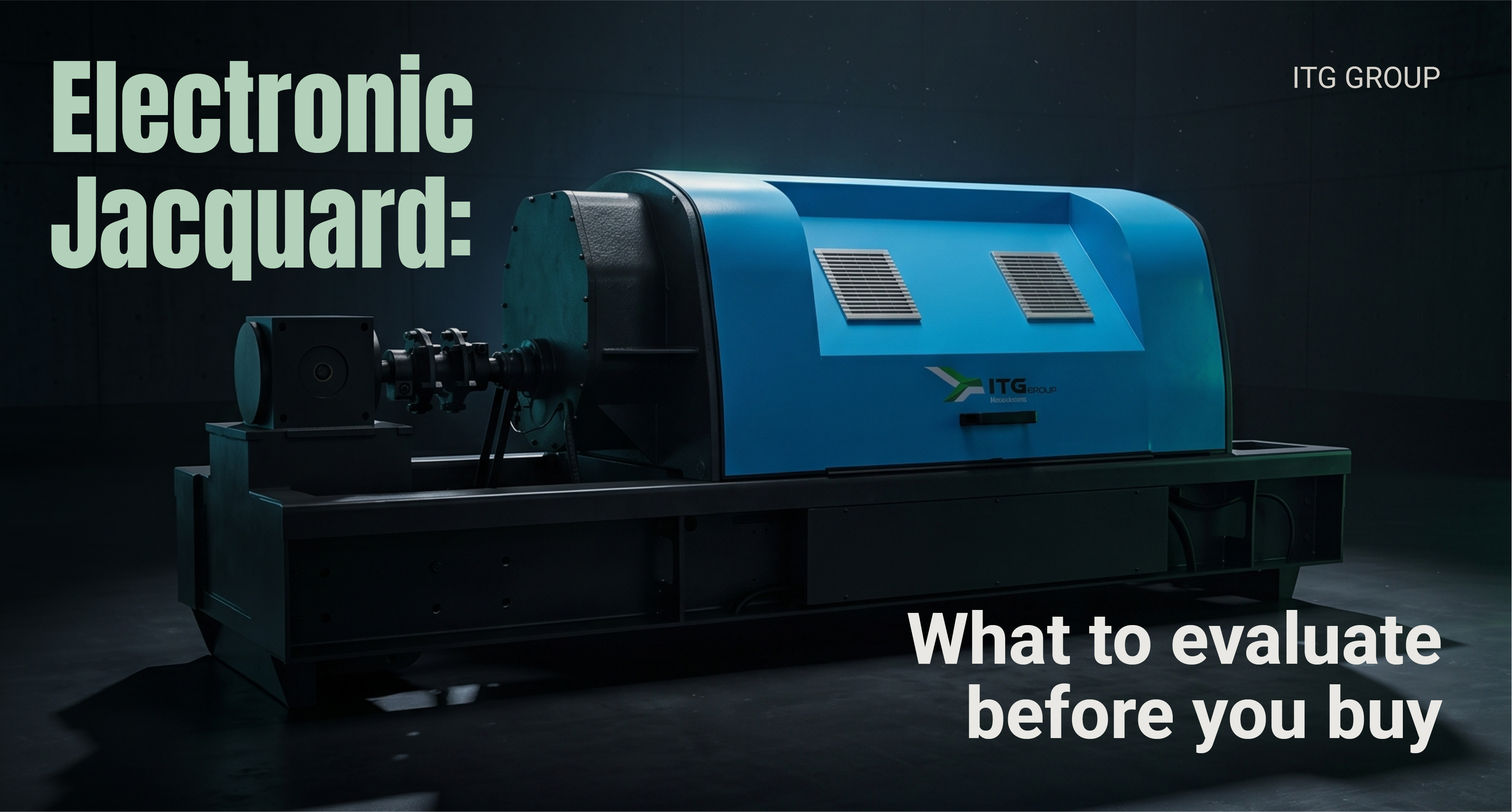
Electronic Jacquard: What to Evaluate Before You Buy
Specifying an electronic jacquard system isn't a straightforward purchase decision. Two systems can share the same hook count, run on the same loom, and produce the same fabric — and still deliver completely different results in daily production. The difference lies in four technical parameters that most spec sheets don't put front and center: drive mechanism, controller architecture, shedding geometry, and compatibility envelope.
Drive mechanism
The drive system is the most consequential technical decision in a jacquard specification. It directly determines maximum operating speed, vibration profile, maintenance intervals, and the types of fabric the system can reliably produce.
Bilateral eccentric cam — This is the highest-performance drive architecture currently available in electronic jacquard. The cam acts on both sides of the mechanism simultaneously, distributing load symmetrically and eliminating the unbalanced forces that cause vibration at high speeds. The result is stable operation at up to 650 RPM — the threshold at which most double-chain or gear systems begin to degrade in consistency. For mills running air jet or high-speed rapier looms, this is the only drive type that keeps pace without compromising shed quality.
Double chain system — A proven architecture for medium-speed environments, the double chain delivers reliable double-lift full-shedding performance at up to 300 RPM. Its mechanical simplicity translates to fewer failure points and predictable maintenance cycles. The trade-off is an upper speed ceiling that makes it unsuitable for high-speed shuttleless looms running above that threshold.
Gear drive — The most mechanically straightforward of the three, gear transmission is optimized for low-speed operation up to 250 RPM. Its compact footprint makes it the practical choice for mills with constrained floor space or lower production volumes. Three shedding types are supported — 95/95, 115/115, and 95/115 — giving it more shedding geometry flexibility than its speed range might suggest.
Controller architecture
Speed and mechanical stability determine the ceiling of what a jacquard system can do. The controller determines how much of that ceiling you actually use in daily production.
The shift from proprietary industrial controllers to Windows-based systems with optical transmission and dual-core processing has fundamentally changed two things: design changeover time and fault resolution speed.
Design changeover. A Windows-based controller running EP and JC programs natively means new patterns load directly from standard design software without format conversion or reprogramming. For mills running short production runs or managing multiple buyers with different specifications, this directly impacts how many articles a loom can produce per shift.
Fault diagnosis. Dual-core processing enables real-time monitoring of needle-selecting performance, shed formation consistency, and drive system status simultaneously. When a fault occurs, the system can isolate the cause and display it immediately rather than requiring manual inspection across mechanical components. In practice, this means the difference between a 10-minute intervention and a two-hour troubleshooting process.
Anti-interference performance. In multi-machine environments — which describes most production mills — electromagnetic interference between looms is a real operational variable. Industrial-grade controller systems with dedicated anti-interference transmission architecture maintain signal integrity across the full hook array even when adjacent machines are running at full speed.
Shedding geometry
Shedding size — the distance between open and closed shed positions — is rarely the first number buyers look at, but it has direct consequences for warp tension management and fabric quality consistency.
The 50–120mm shedding size range supported by bilateral eccentric cam and double-chain systems covers virtually the full spectrum of flat fabric production: home textiles, garment fabric, towels, ties, and technical fabrics. The adjustment mechanism matters as much as the range: a fast, simple knife height-adjustment system and quick opening dimension-adjustment system allow operators to optimize shed geometry for each article without extended downtime between changeovers.
For gear-drive systems, shedding sizes of 95/95, 115/115, and 95/115 provide a defined but sufficient range for the fabric types these systems are designed to produce — primarily flat fabrics, terry cloth, and label applications on low-speed rapier and shuttle looms
Compatibility: mounting a jacquard on your existing loom
The commercial case for electronic jacquard in mid-sized mills often rests on the ability to add capability to existing machinery rather than replacing it. That requires honest compatibility assessment across three variables.
Loom type. Bilateral eccentric cam systems are compatible with rapier, air jet, water jet, and shuttle looms — a full compatibility envelope. Double-chain systems are designed for rapier and shuttle looms. Gear-drive systems target low-speed rapier and shuttle configurations specifically.
Operating speed. The jacquard system's maximum RPM must match or exceed the loom's operating speed. Installing a 300 RPM-rated double-chain system on a loom running at 450 RPM will produce inconsistent shed formation and accelerated mechanical wear — two outcomes that eliminate any production efficiency gains.
Hook count relative to fabric width and pattern complexity. Hook count determines the maximum pattern resolution available at a given reed width. A system with insufficient hooks for the intended fabric width produces visible pattern repeat limitations regardless of how capable the controller is. The range from 480 to 15,360 hooks across the ITG Group line covers single-width label production through wide-width complex jacquard for upholstery and automotive applications.
Market context and ROI
The global jacquard fabric market was valued at $3.45 billion USD in 2024 and is projected to reach $5.67 billion USD by 2033, growing at a CAGR of 6.5%. That growth is distributed across fashion, home textiles, automotive interiors, and technical fabrics — meaning jacquard-capable mills have multiple end markets to address from a single capital investment. Verified Market Reports
Electronic jacquard adoption is accelerating across mid-scale mills, democratizing complex pattern production previously limited to premium heritage manufacturers. The economics are straightforward: jacquard fabric commands a price per meter that plain equivalents cannot reach using the same loom and labor. Mills implementing digital jacquard systems report reduced downtime, lower maintenance costs, and increased production yields compared to older technologies. OpenPRTextile School
The honest qualification: the return is proportional to the mill's ability to access buyers who pay for design complexity. The machine enables the margin — it doesn't create the commercial relationship.
ITG Group's solution
ITG Group offers the GE/GES, DL/DLS, and GYJ families, each matched to a specific operational profile.
The GE/GES runs up to 650 RPM on a bilateral eccentric cam drive with a Windows-based controller, optical transmission, and dual-core processing. Compatible with rapier, air jet, water jet, and shuttle looms. Available from 1,824 to 15,360 hooks. The right specification for high-speed mills producing complex articles across wide widths.
The DL/DLS runs up to 300 RPM on a double chain drive with an industrial-grade anti-interference controller. Designed for rapier and shuttle looms in stable medium-speed production environments. Available from 1,408 to 2,816 hooks.
The GYJ runs up to 250 RPM on a gear drive with a compact frame built for space-constrained factories. Supports three shedding geometries. Available from 480 to 6,912 hooks. The most accessible entry point into electronic jacquard production without sacrificing core design capability.
All three systems support EP and JC design programs, feature tool-free shed opening adjustment, and include fast-diagnostic controllers for minimal downtime during fault resolution.
If you're evaluating jacquard compatibility with your current loom configuration, ITG Group's technical team can assess your specific setup and recommend the right system. The analysis starts with what you already have.
Sources: Verified Market Reports, DataHorizzon Research, Textile School.